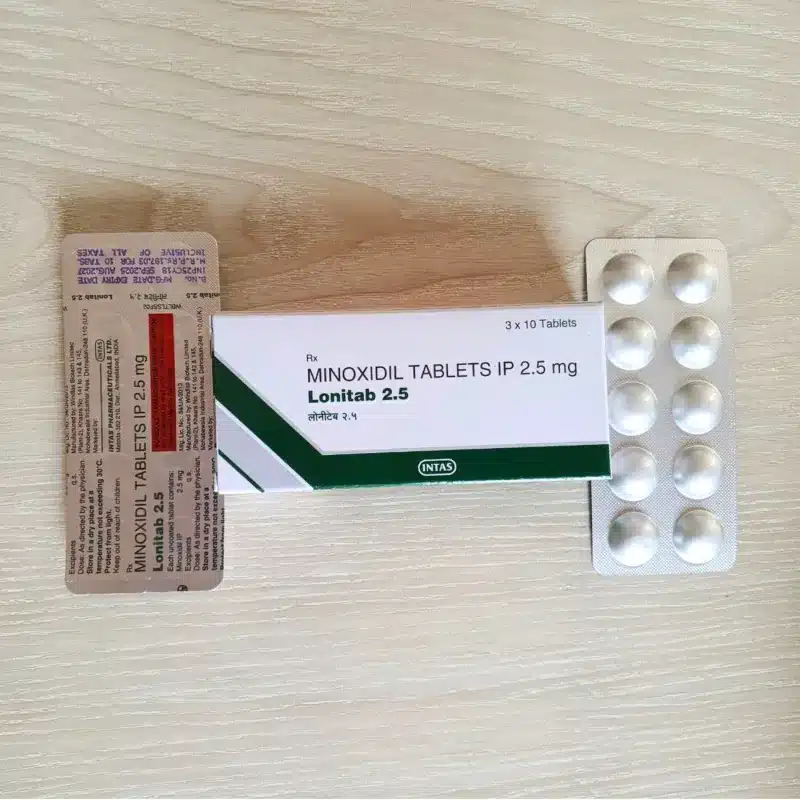
Oral minoxidil is a systemic treatment for hair thinning and pattern hair loss (androgenetic alopecia) in both men and women. Originally developed as an oral blood pressure medication, low-dose oral minoxidil works internally to widen blood vessels around hair follicles, prolong the active growth phase, and promote denser, thicker scalp coverage.
Key Benefits of Low-Dose Oral Minoxidil
Mess-Free Alternative: Eliminates the sticky residue, scalp dryness, or styling difficulties associated with topical minoxidil liquids and foams.
Full Scalp Coverage: Delivers active medication via the bloodstream, benefiting diffuse thinning across areas that are hard to treat topically.
High Bioavailability: Bypasses reliance on scalp enzyme activity, making it effective for individuals who show limited response to topical applications.
Usage & Medical Safety
Oral minoxidil is a prescription medication. Dosages for hair regrowth typically range between 0.625 mg and 5 mg daily—significantly lower than standard antihypertensive doses. Consultation with a licensed healthcare practitioner is required to determine appropriate dosing, evaluate cardiovascular suitability, and monitor potential side effects such as hypertrichosis (unwanted body hair growth) or fluid retention.
Frequently Asked Questions
How long does it take to see results from oral minoxidil?
Initial shedding may occur during the first 2–8 weeks as dormant follicles reset. Visible hair density improvements generally appear between 3 to 6 months of continuous daily use.
Can oral minoxidil be combined with DHT blockers?
Yes. Medical professionals frequently pair oral minoxidil (a growth stimulant) with DHT blockers like finasteride or dutasteride (which address underlying hormone-driven hair loss) for a comprehensive dual approach.
Is a prescription required?
Yes. Oral minoxidil requires a valid prescription and oversight from a healthcare provider.